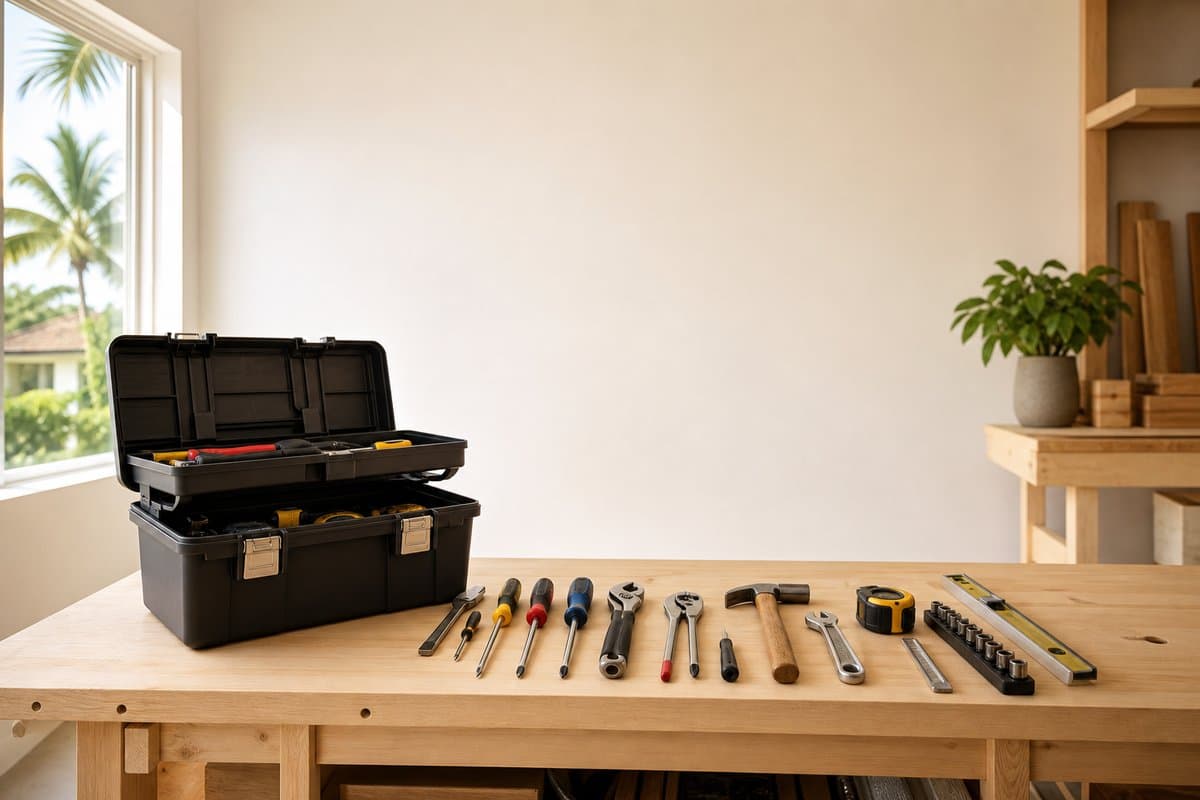
Interior Trim and Baseboard Repair Guide for Tampa Bay Homes
By James Evans
## Interior Trim and Baseboard Repair Guide for Tampa Bay Homes
Interior trim -- baseboards, door casing, window casing, and chair rail -- is among the most frequently repaired finish elements in Tampa Bay homes. Florida's humidity causes wood trim to absorb moisture seasonally, and the expansion and contraction of the wood against the CBS block walls common in Tampa Bay construction creates gaps at seams, pulling at mitered corners, and paint cracking along caulk lines that re-open year after year. Impact damage from furniture, floor cleaning equipment, and general household activity adds dented, gouged, and broken trim sections to the repair inventory. Painting over damaged trim without addressing the underlying repair produces a result that looks poor immediately and does not last.
## Key Takeaways
- Most baseboard damage in Tampa Bay homes is concentrated at lower sections where moisture from cleaning, foot traffic, and humidity cycles affects the trim wood
- Coped inside corner joints hold better than mitered inside corners in Tampa Bay's humidity cycling -- the cope accommodates seasonal wood movement that would open a mitered joint
- MDF baseboard (medium-density fiberboard) is widely used in Tampa Bay construction for its smooth pre-primed surface but swells at the bottom edge if it contacts standing water or high-moisture conditions
- Priming all cut ends of replacement trim before installation prevents moisture absorption at the cut faces
- Caulking the joint between the trim top edge and the wall, and between the base and the floor, is required for a professional finished appearance and for preventing moisture infiltration
## Assessing Trim Damage
**Visual inspection:** Walk the perimeter of each room at baseboard level. Note open miter or cope joints at corners, sections with impact damage (dents, splits, partial breaks), paint peeling or bubbling from moisture exposure, and trim that has pulled away from the wall leaving a visible gap.
**Physical check:** Press the baseboard along its length to identify sections that flex away from the wall -- indicating that the fasteners have pulled out of the block or drywall behind. MDF baseboard in Tampa Bay homes that has been in contact with wet mopping water shows edge swelling at the bottom; press the bottom face and look for swelling or delamination.
**Moisture damage:** Baseboards near exterior door thresholds and in bathrooms are the highest-risk locations for moisture damage. The screwdriver probe test identifies rot in wood baseboards -- soft resistance rather than solid resistance confirms degraded material. Swollen MDF is not rotten in the structural sense but is permanently deformed and does not restore to its original profile.
## Removing Damaged Sections
Before removing any trim, score the paint line along the wall above the trim and along the floor below with a utility knife. The paint film that bridges the trim-to-wall joint will tear rather than peel cleanly if not cut first, which pulls wall drywall paper or pulls paint from the wall in strips adjacent to the trim.
Use a pry bar with a wide face to avoid concentrating force on a small area of the wall surface. Insert the pry bar between the wall and the trim, working along the length of the section in 6 to 8 inch increments rather than prying from a single point. Where the trim is fastened with finish nails, pull the nails through the back of the trim with end nippers rather than punching them through the face, which leaves a larger hole and can split the trim.
Remove one section at a time. The adjacent sections and their corner joints determine the cut location for the new replacement section.
## Inside Corners: Coped Versus Mitered Joints
Inside corners in trim carpentry are made with either a coped joint or a mitered joint.
**Mitered inside corners** (two pieces each cut at 45 degrees to form a 90-degree corner) are common in new construction but open at the joint over time in Tampa Bay's humidity cycling. As trim expands in summer and contracts in winter, the two miter faces move relative to each other and open a visible gap.
**Coped joints** (one piece cut square to butt against the wall, the adjacent piece cut with a coping saw to follow the profile of the first piece and overlap it) hold the joint tight through seasonal movement because the overlap accommodates the dimensional change. For trim replacement in Tampa Bay homes where existing mitered corners are opening repeatedly, replacing them with coped joints at the same visit is worth the additional labor.
## Outside Corners: Mitered Joints
Outside corners (at room projections, pilasters, or column wraps) are always mitered. Two pieces each cut at 45 degrees form the outside corner. Outside miter joints in Tampa Bay homes are prone to opening for the same humidity cycling reason as inside miter joints -- using a thin bead of wood glue on the miter faces before nailing and clamping briefly improves joint durability.
## Fastening and Filling
Nail trim to wall studs or into the CBS block wall through drywall. In CBS block construction -- the dominant residential type in Tampa Bay -- the block behind the drywall provides solid backing but requires masonry nails or construction adhesive when stud locations are not available. Finish nails into wood studs are the most reliable fastening; where stud locations are not directly behind the trim run, construction adhesive applied to the back of the trim holds the trim flat to the wall.
Countersink finish nails slightly below the surface. Fill nail holes with lightweight spackling or wood filler -- spackling dries faster but is less durable; wood filler accepts a painted finish better for high-traffic areas.
## Caulking
Caulk the joint between the top edge of the trim and the wall with a paintable latex or acrylic caulk. Run a thin, consistent bead along the full length of the trim, tool smooth with a damp finger or caulk tool, and wipe the excess before it skins. The joint between the base of the trim and the floor surface typically receives caulk only in kitchens and bathrooms -- in living areas, a painted finish that meets the floor is standard.
For exteriors at the junction between baseboard cap and painted wall, 100 percent silicone or a high-quality paintable siliconized acrylic holds longer than standard latex caulk in Florida's UV environment.
## Painting Replacement Trim
Prime all replacement trim before installation. Factory-primed MDF or finger-jointed pine accepts a topcoat directly with no additional priming needed if the primer is intact. Cut ends must be primed before installation -- the exposed end grain absorbs moisture and paint disproportionately if left unprimed.
After installation and caulking, apply one or two coats of interior semi-gloss or gloss paint. Semi-gloss at 45 to 60 degree sheen provides durable cleanability and the traditional Florida interior trim appearance. Match the existing trim sheen and color if only sections are being replaced.
## FAQ
**Can baseboards in a CBS block Tampa Bay home be nailed the same way as in a wood-frame home?**
Not always. CBS block behind the drywall does not accept standard finish nails unless a stud or wood blocking is present. Construction adhesive is the primary fastener for sections without stud backing in block construction. Where a wood sill plate runs at the base of the wall, finish nails into the plate provide solid fastening.
**Why do mitered corners on baseboards keep opening up in Florida?**
Tampa Bay's humidity cycling causes dimensional movement in trim wood and MDF through the year. Miter joints that are tight in December open as wood expands in summer. Coped inside corners are more durable than mitered inside corners in Florida because the overlap accommodates this movement. Replacing reopening mitered inside corners with coped joints solves the recurring gap problem.
**Does Best Bay Services handle baseboard and trim repair throughout Tampa Bay?**
Yes. Interior trim and baseboard repair -- including section replacement, corner joint repair, caulking, and finishing -- is a standard handyman service throughout Tampa Bay. Call (813) 416-8676 or submit a request through our website for a free estimate.
Need Professional Help?
Let James handle it — call for a free estimate today.
James has over 10 years of experience in home repair and maintenance throughout Tampa Bay. He founded Best Bay Services to bring honest, quality handyman work to local homeowners, landlords, and property managers.